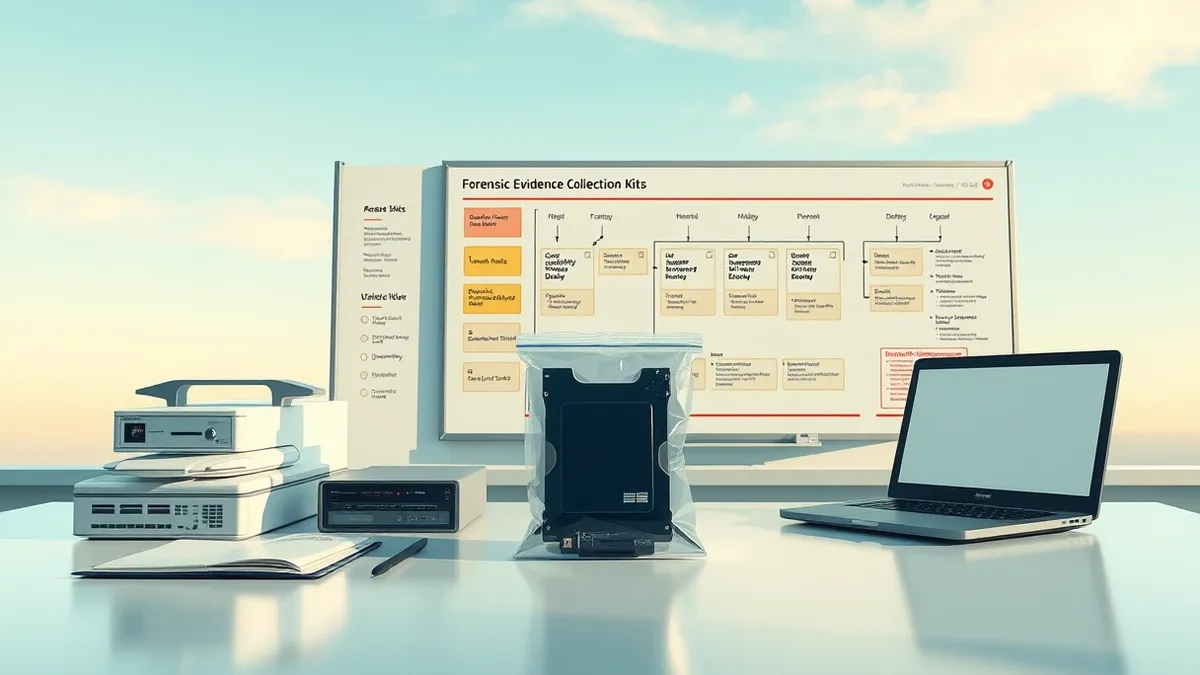
Establish a documented playbook with defined roles, preserve logs before remediation, and practice communication channels. Verify containment through independent checks. Treat every incident as a test of your process, not just a technical problem to solve.
1. Define Decision Authority and Roles
Ambiguity during a crisis causes delays that allow threats to spread. You must assign specific individuals the authority to make high-impact decisions, such as disconnecting a critical server or notifying legal counsel. Without this pre-authorization, teams waste time seeking consensus while the attacker advances.
Identify a primary incident commander who has the final say on containment strategies. This person should be supported by technical leads who provide data but do not hold veto power. This structure prevents analysis paralysis and ensures rapid execution of containment measures.
2. Maintain a Living Playbook
Static documents become obsolete as your infrastructure evolves. A playbook that references decommissioned servers or retired protocols leads to wasted effort and missed steps. You need a living document that reflects your current architecture and known threat vectors.
Review and update your playbooks after every major infrastructure change or security drill. Assign ownership of each section to a specific team member who is responsible for verifying its accuracy quarterly. This ensures the guidance remains relevant and actionable when real incidents occur.
Consider how supply chain attacks might bypass your standard internal controls. Your playbook must include specific procedures for third-party vendor compromise, not just internal endpoint breaches. This distinction changes the containment strategy significantly, often requiring external coordination.
3. Preserve Evidence Before Remediation
The instinct to shut down an infected system is strong but often counterproductive. Powering off a machine clears its volatile memory, which may contain encryption keys, active connections, or indicators of compromise that are not present on the disk. You lose critical forensic data by prioritizing immediate cleanup over evidence preservation.
Isolate the affected system from the network instead of shutting it down. Use network segmentation or firewall rules to cut off all traffic while keeping the machine powered. This allows you to capture a memory dump and analyze active processes before wiping the drive.
4. Implement Robust Log Management
You cannot investigate what you cannot see. Many organizations fail to retain logs long enough or collect them from all critical systems. Without centralized logging, attackers can wipe local records, leaving you blind to their initial entry point and lateral movement.
Centralize logs from endpoints, servers, and network devices into a secure, write-once storage system. Ensure that log integrity is protected by cryptographic hashing or immutable storage techniques. This prevents attackers from altering or deleting historical data to cover their tracks.
Review your retention policies to ensure they cover the maximum dwell time of known threats. If an attacker remains hidden for months, you need logs from that period to reconstruct the timeline. Short retention periods create blind spots that hinder effective investigation.
5. Test Communication Channels
Technical tools are useless if your team cannot communicate effectively. During an incident, standard email or messaging platforms may be compromised or overloaded. You need redundant, secure communication channels that remain functional even if primary systems are down.
Establish out-of-band communication methods, such as encrypted messaging apps or dedicated phone lines, for incident response teams. Test these channels regularly to ensure they work under stress and that all team members have access. This prevents coordination failures that delay containment and recovery.
Be aware of the human factor in security during high-pressure situations. Stress can impair judgment and communication clarity. Pre-defined message templates and clear escalation protocols help maintain order and ensure that critical information is transmitted accurately.
See also: Log Retention: How Long to Keep Records and Why It Matters · Backup Data Exposure: Immediate Response and Recovery Steps
6. Verify Containment Independently
Assuming containment is complete based on initial indicators is a dangerous shortcut. Attackers often establish multiple entry points or backdoors to ensure they can return if one is closed. You must verify that the threat is fully contained before declaring the incident resolved.
Use independent tools or teams to scan for residual threats and verify that all malicious connections are severed. Cross-reference network traffic, process lists, and file integrity checks to confirm that no unauthorized activity remains. This double-check prevents premature closure and recurring incidents.
Consider the blast radius of the initial compromise. If the attacker had access to administrative credentials, assume all systems they could reach are tainted. A narrow containment strategy may miss lateral movement to less critical but still valuable assets.
7. Conduct Post-Incident Reviews
Learning from incidents is the most effective way to improve future response capabilities. Many teams skip the review process due to time pressures or fear of blame. Without a structured review, you repeat the same mistakes and leave vulnerabilities unaddressed.
Hold a blameless post-mortem meeting within days of the incident resolution. Focus on process failures and technical gaps rather than individual errors. Document findings and assign specific actions to address identified weaknesses, tracking progress until completion.
Analyze whether your response aligned with your playbook and where deviations occurred. This helps refine procedures and identify training needs. Regular reviews turn incidents into opportunities for strengthening your overall security posture.
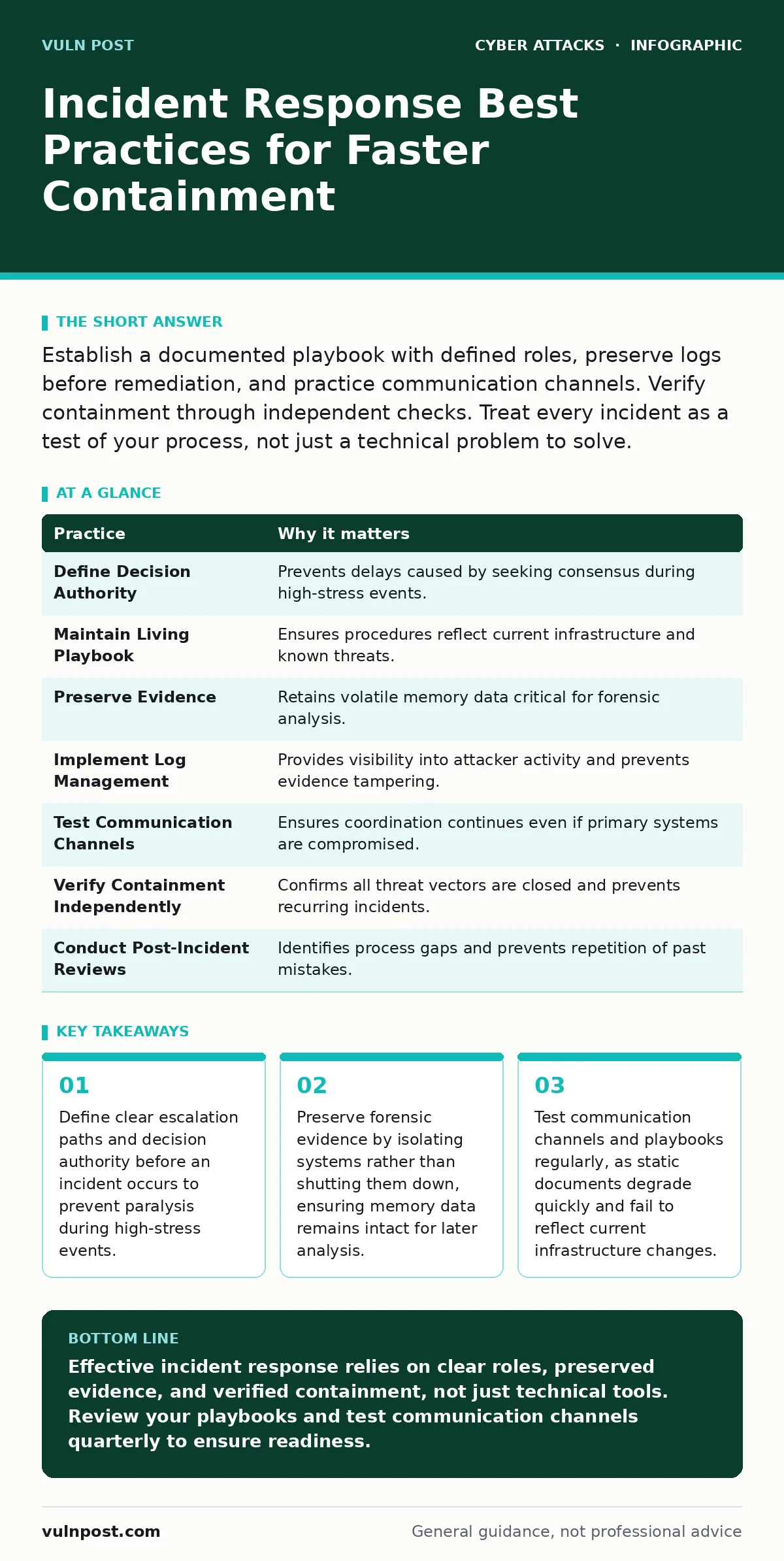
| Practice | Why it matters |
|---|---|
| Define Decision Authority | Prevents delays caused by seeking consensus during high-stress events. |
| Maintain Living Playbook | Ensures procedures reflect current infrastructure and known threats. |
| Preserve Evidence | Retains volatile memory data critical for forensic analysis. |
| Implement Log Management | Provides visibility into attacker activity and prevents evidence tampering. |
| Test Communication Channels | Ensures coordination continues even if primary systems are compromised. |
| Verify Containment Independently | Confirms all threat vectors are closed and prevents recurring incidents. |
| Conduct Post-Incident Reviews | Identifies process gaps and prevents repetition of past mistakes. |
8. Monitor for Advanced Persistence
Attackers often use sophisticated techniques to maintain access even after initial detection. These mechanisms may not trigger standard alerts and can remain hidden for long periods. You need to monitor for subtle anomalies that indicate persistent threats.
Look for unusual scheduled tasks, new user accounts, or modified system files that do not match baseline behavior. Use behavioral analytics to detect deviations from normal activity patterns. This helps identify low-and-slow attacks that evade signature-based detection.
Be mindful of API abuse as a persistence mechanism. Attackers may exploit legitimate API endpoints to exfiltrate data or maintain control. Monitor API usage for unusual patterns or unauthorized access attempts to detect these subtle threats.
9. Prepare for External Coordination
Incidents often require coordination with external parties, such as law enforcement, legal counsel, or cybersecurity firms. Preparing for this coordination in advance ensures smoother communication and compliance with legal requirements.
Establish relationships with external partners before an incident occurs. Define the criteria for when to involve them and what information to share. This preparation reduces the time needed to engage external resources and ensures that all parties are aligned on objectives.
Consider the implications of email authentication failures during external communication. Ensure that your outbound communication channels are secured to prevent spoofing or interception. This maintains the integrity of your communications with external partners.
Key takeaways
- Define clear escalation paths and decision authority before an incident occurs to prevent paralysis during high-stress events.
- Preserve forensic evidence by isolating systems rather than shutting them down, ensuring memory data remains intact for later analysis.
- Test communication channels and playbooks regularly, as static documents degrade quickly and fail to reflect current infrastructure changes.
Effective incident response relies on clear roles, preserved evidence, and verified containment, not just technical tools. Review your playbooks and test communication channels quarterly to ensure readiness.
Frequently asked questions
How often should incident response playbooks be updated?
Update playbooks after every major infrastructure change or security drill, and review them quarterly to ensure accuracy.
What is the first step when detecting a potential incident?
Isolate the affected system from the network to prevent spread while preserving evidence for forensic analysis.
Why is preserving memory evidence important?
Volatile memory contains active connections and encryption keys that are lost when a system is powered off, hindering forensic investigation.
How can teams verify containment is complete?
Use independent tools and teams to scan for residual threats and cross-reference network traffic and process lists to confirm no unauthorized activity remains.
How this guide was produced: written by the Vuln Post editorial team with AI assistance, checked against the public references listed below, and reviewed when the facts change. See our editorial policy or report an error.